IFFI Brings Iran and Iraq Together as Filmmakers Share Stirring Cinematic Testimonies of Life Under Pressure

IFFI Brings Iran and Iraq Together as Filmmakers Share Stirring Cinematic Testimonies of Life Under Pressure
‘My Daughter’s Hair’ Cuts through the Heart of Iran’s Social Realities
‘The President’s Cake’ Serves a Slice of Life Under Dictatorship
#IFFIWood, 26 November 2025
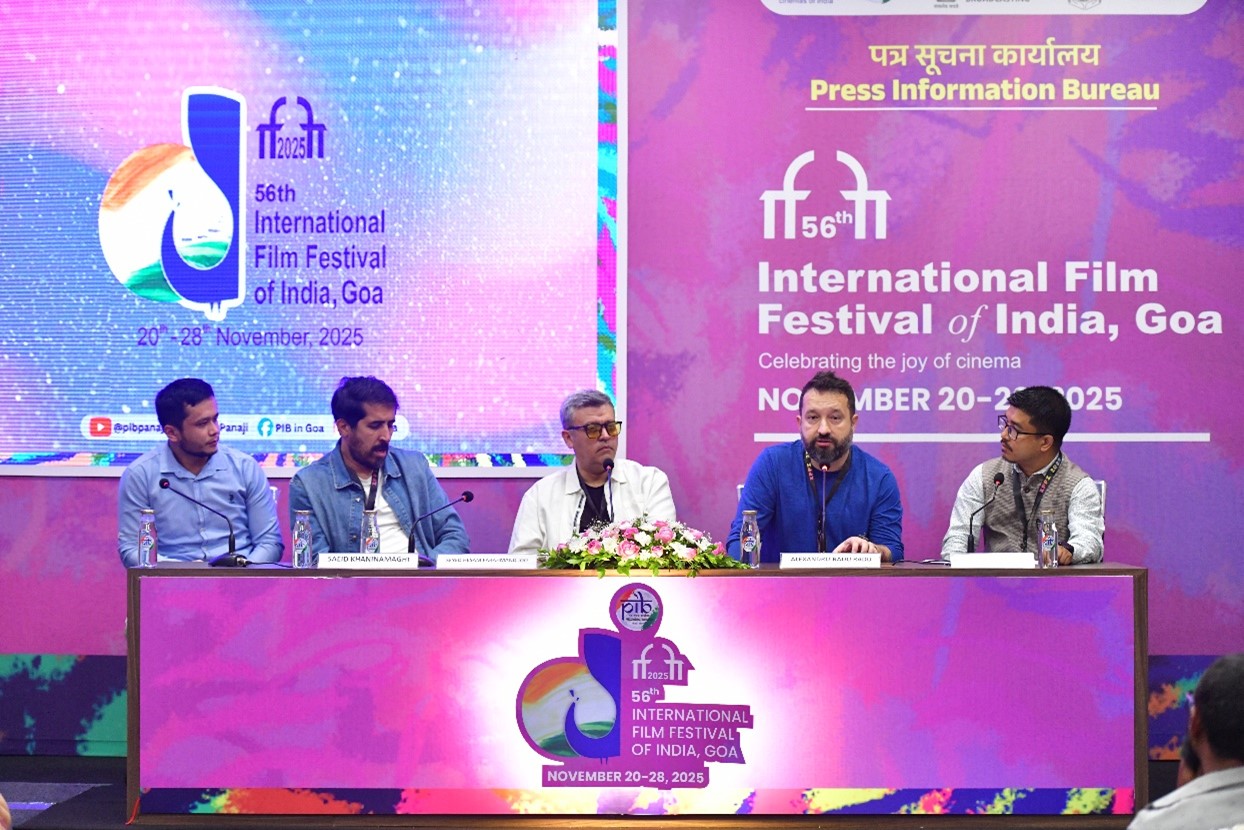
At the IFFI press conference today, Iran and Iraq shared the stage, telling stories of ordinary people who are pushed to survive extraordinary circumstances. Two nations with turbulent histories, two films born from political pressures, and two teams united by a common conviction came together to trace the emotional cartography of their nations, connecting personal memories with collective wounds.
Representing the Iranian feature ‘My Daughter’s Hair (Raha),’ a film that is competing in the ‘Best Debut Feature Film of a Director’ section in IFFI, Director Seyed Hesam Farahmand Joo and Producer Saeid Khaninamaghi joined the conversation. For Iraq’s ‘The President’s Cake,’ competing for ICFT UNESCO Gandhi Medal, Editor Alexandru-Radu Radu spoke about the film’s unique form and its stark portrayal of life under dictatorship.
A Middle-Class Family in Crisis, A Country in Reflection
Hesam revealed that ‘My Daughter’s Hair’ stems from his own life experiences. “I wanted to portray the situation of women in my country,” he said, explaining how Raha’s story, selling her hair for a laptop, mirrors the quiet sacrifices made by countless women navigating financial precarity.
Producer Khaninamaghi expanded the context further, describing how recent international sanctions have sharply deteriorated living conditions in Iran.
“People are going down financially. The middle class is becoming poor,” he said. “In our film, a family’s entire economy collapses because of one laptop. That is exactly what is happening in our society.”
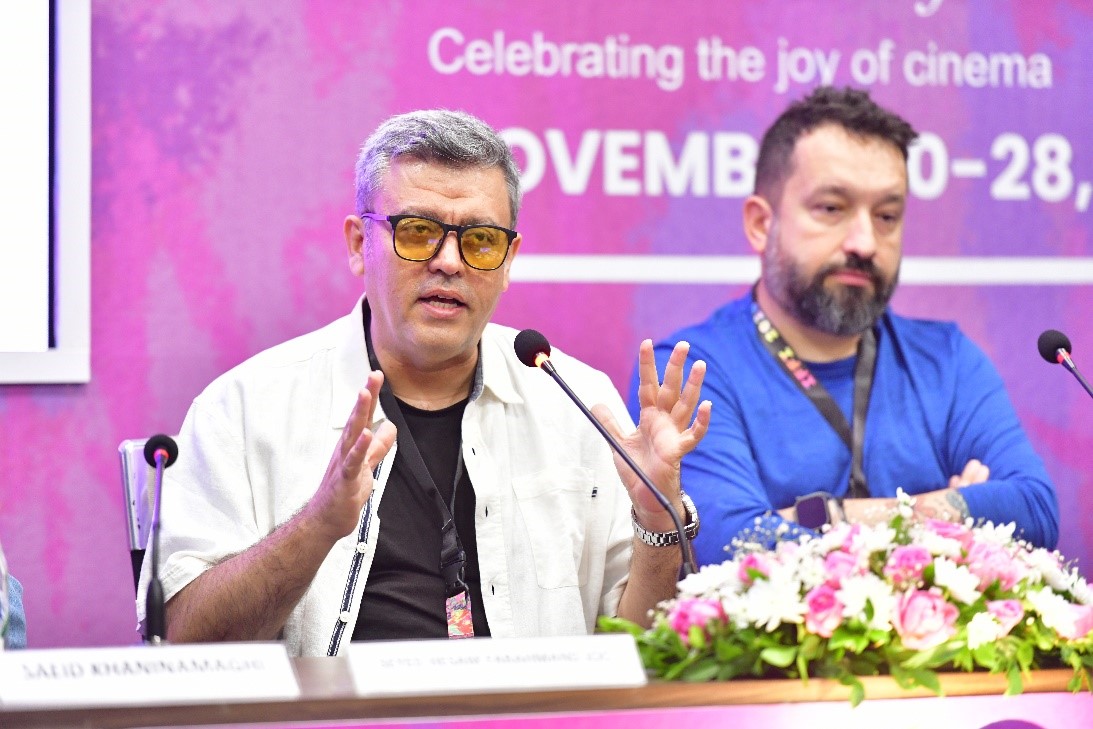
When asked about the film’s visual language, Hesam rejected the “drab poverty” aesthetic often imposed on stories about the working class. “I wanted the frames to look exactly like life,” he said. “Poor families also have colourful, happy moments. They laugh, they celebrate, they find colour in their lives. I wanted to show that truth, through the aesthetics of my frames.”
Hesam also spoke about wanting to bring such socially rooted stories into commercial cinema. “Earlier, these films were not considered commercial. I want to change that,” he said, hinting that his next project follows the same philosophy.
Khaninamaghi addressed the current scenario in Iranian cinema, emphasising that even as filmmakers push boundaries, their film industry continues to wrestle with censorship. “Parts of films get cut, and the audience struggles to understand the full story,” he said.
A Fairy Tale Born in Fear
Taking the conversation to Iraq of the 1990s, Alexandru-Radu Radu described ‘The President’s Cake’ as a film built on “street-cast” performances. All the actors are non-professionals, selected from everyday life, which gives the film its distinct immediacy.
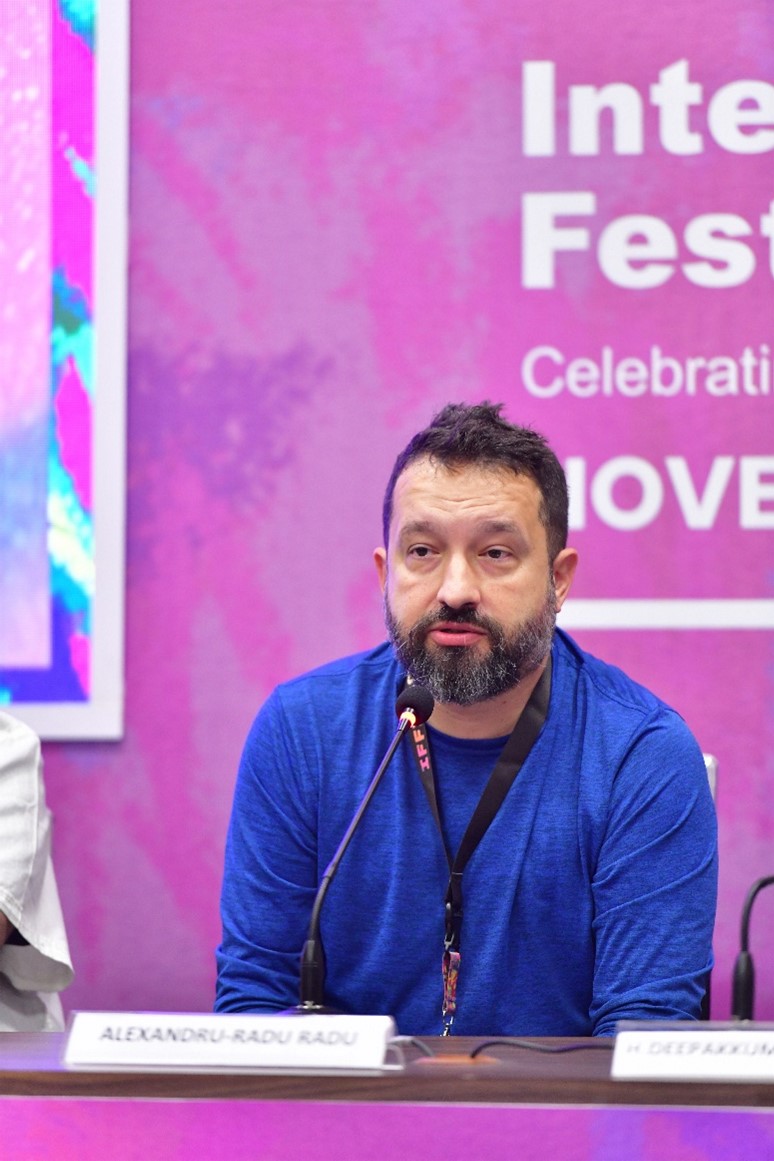
Radu explained that the film focuses on how sanctions and authoritarian rule crush the lower classes. “When such things happen, the people suffer, not the dictators,” he said, recounting how the film’s plot is inspired by a dictator forcing the citizens to celebrate his birthday. The story of a young girl, Lamia, tasked with baking a cake for Saddam Hussein, teeters between absurdity and lived reality.
Director Hasan Hadi, he said, envisioned the story as a fairy tale.
“Hasan wanted Lamia to be a symbol of Iraq,” Radu explained. “Everything happening to her reflects everything happening to the country.” Radu also spoke about Iraq’s young and emerging film industry: “Unlike Iran, Iraq doesn’t have a rich film tradition. ‘The President’s Cake’ is the first art-house film in Iraq. Directors like Hasan are now building that industry.”
Despite coming from different countries and cinematic traditions, both films circle similar truths: the weight of sanctions, the resilience of ordinary people, and the everyday negotiations of dignity under political pressure. By the end, the conversation felt like a bridge stretching from Tehran to Baghdad, built not of politics, but of storytelling.
PC Link:
About IFFI
Born in 1952, the International Film Festival of India (IFFI) stands tall as South Asia’s oldest and largest celebration of cinema. Jointly hosted by the National Film Development Corporation (NFDC), Ministry of Information and Broadcasting, Government of India and the Entertainment Society of Goa (ESG), State Government of Goa, the festival has grown into a global cinematic powerhouse—where restored classics meet bold experiments, and legendary maestros share space with fearless first-timers. What makes IFFI truly sparkle is its electric mix—international competitions, cultural showcases, masterclasses, tributes, and the high-energy WAVES Film Bazaar, where ideas, deals and collaborations take flight. Staged against Goa’s stunning coastal backdrop from November 20–28, the 56th edition promises a dazzling spectrum of languages, genres, innovations, and voices—an immersive celebration of India’s creative brilliance on the world stage.